They're lost to a rule breach nobody was watching for.
Set a max risk per trade and get scored on every trade that exceeds it.
A daily loss limit is rarely breached by a run of normal trades. It goes when risk quietly creeps up on a position you felt sure about.
Two losses in, the position sizing goes up and the stop comes off. Nobody plans that, and afterwards it's hard to see how much it cost.
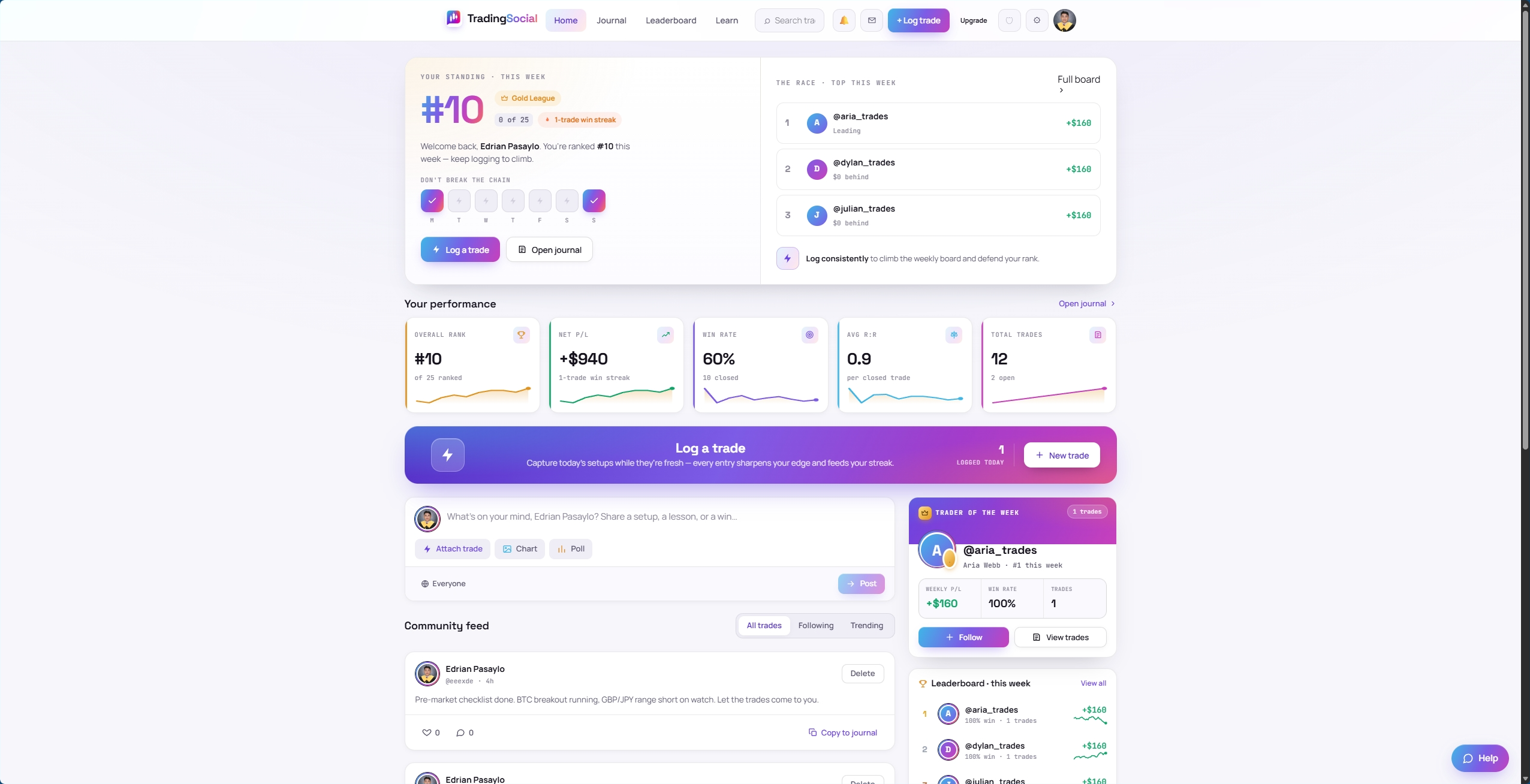
Rule compliance shows the share of trades that followed your rules — and the P&L of the ones that didn't.
Your risk, your rules, your record — in one place, from evaluation to funded.
Log risk per trade in R multiples before you take it, so a losing day is a known, bounded number — not a surprise.
Set a maximum risk percentage and a maximum number of trades per day, and every trade is checked against both.
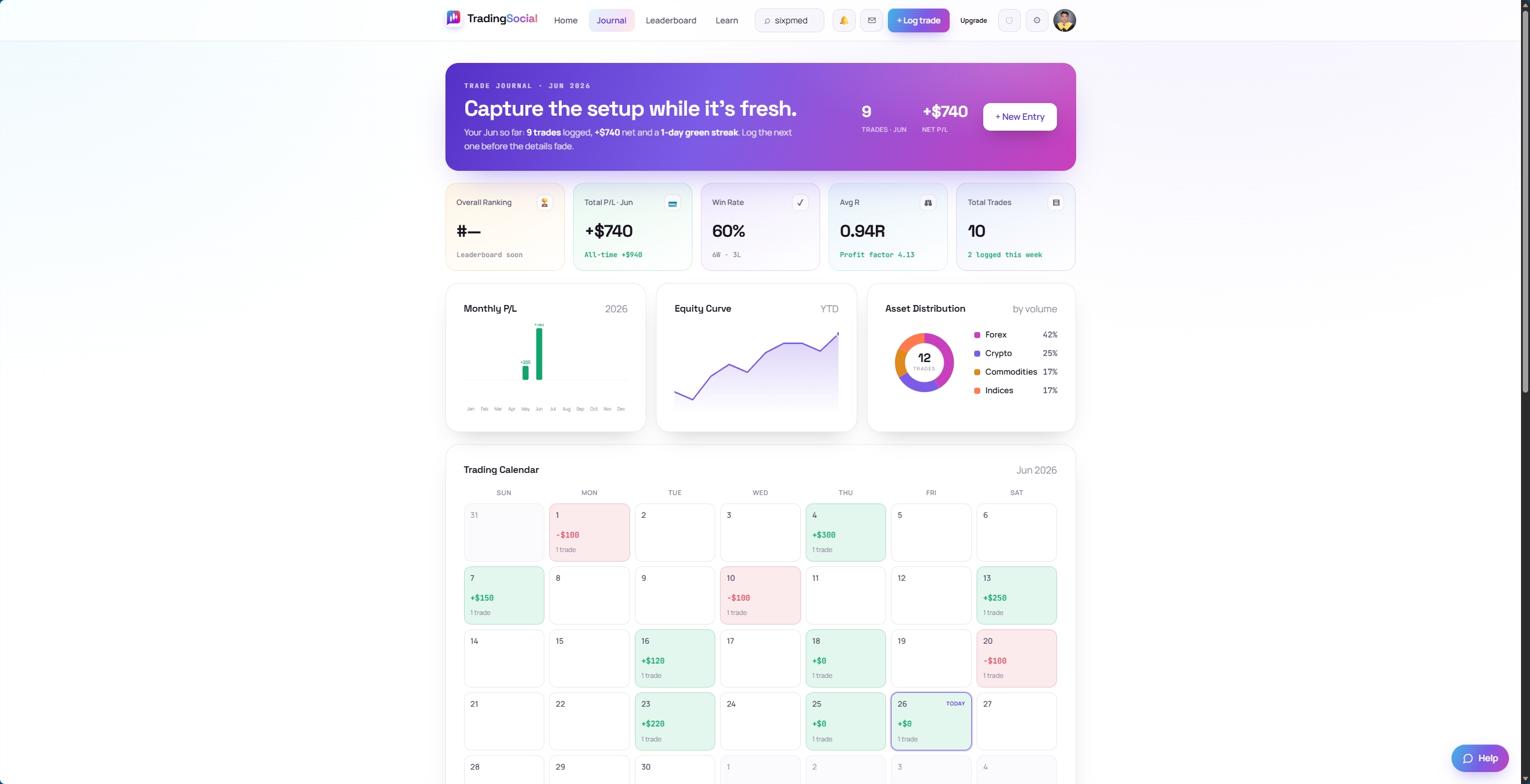
Your max drawdown on the R curve is calculated for you each week, alongside win rate, best setup and costliest mistake.
Stop trading after a set number of consecutive losses, require a stop on every entry, and keep to one session.
Every account is tagged prop, live, demo or competition, so a challenge account is never confused with your own money.
If your firm runs MT5, closed trades land automatically on Pro — verified and locked so imported prices and results can't be edited later.
Whether you're mid-evaluation or already funded, the discipline that gets you there is the same discipline that keeps you there.
From evaluation through to funded, tagged by account so nothing gets mixed up.
With a max-risk rule, and a process goal for staying under it.
A rule that flags the trades you took past your own cut-off — the same pattern personalised insights show clearly: win rate drops after two straight losses.
Three steps, whether you're on your first evaluation or your fifth funded account.
Choose a max risk per trade, a cap on trades per day, a minimum reward-to-risk, whether a stop is required, a session, and when to stop after consecutive losses.
Journal entries, exits, risk and notes for evaluation and funded accounts alike, tagged prop so they never mix with live or demo.
Each week, see the share of trades that followed every rule, what the ones that didn't cost you, and your max drawdown on the R curve.
The challenge tests your strategy for a couple of weeks. Staying funded tests your discipline for a lot longer than that.
— On the difference between passing and staying funded
A prop firm trading journal is where you log every trade from your evaluation and funded accounts — entries, exits, risk, notes — so you can see your risk, consistency and rule compliance in one place instead of piecing it together from a broker statement. If you're still comparing options, we wrote a buyer's guide to prop firm trading journals — seven things to check, including two where we come off worse.
No. TradingSocial doesn't connect to any prop firm's dashboard, and it doesn't read, detect or enforce a firm's rule set. It's your own journal: you set your own trading rules inside it, and it scores your logged trades against those.
Max risk per trade as a percentage, maximum trades per day, a minimum planned reward-to-risk, requiring a stop on every trade, a session restriction, and no trading after a set number of consecutive losses. Rule tracking is on the Trader plan.
If your firm runs MT5, connecting your account lets closed trades sync automatically on the Pro plan, verified and locked so imported prices and results can't be edited. Sync only covers MT5 — other platforms need manual logging. If your firm runs anything other than MT5, our TradeZella comparison covers a tool with far wider prop-firm integration than ours.
Yes. Every account you add carries a label — prop, live, demo or competition — so a challenge account's stats never get mixed into your live track record, or the other way round.
Set your rules, size your risk, and log every trade from evaluation to funded account.