A spreadsheet or a broker export will record what happened. It won't tell you anything back.
The fix: an automatic weekly review, generated whether you ask for it or not.
Most journals are a table you fill in and never open again. Nothing prompts you to look back, so the same setup keeps costing you the same way.
Without a stated sample size, a real pattern in your trades and a four-trade hunch look exactly the same.
Personalised patterns (Pro) always state the sample size behind them, so you know whether it's a real tendency or four trades and a hunch.
Every part of it points at the same job: turning trades you've already taken into decisions you make better next time.
Setup, entry, exit, size and risk in R as standard — plus a screenshot, your rationale, emotional state and a mistake tag on every trade.
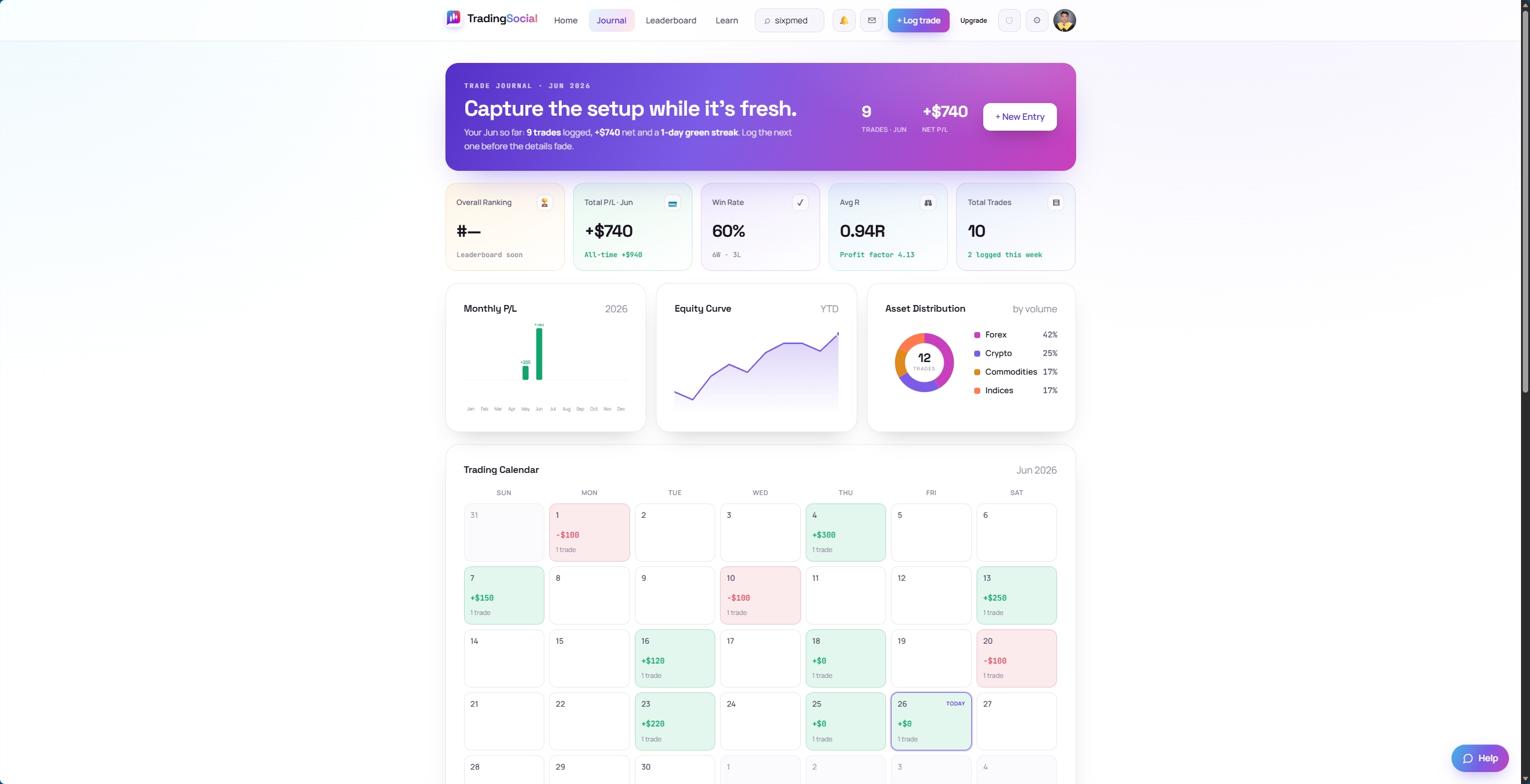
Every week (Trader plan and above) TradingSocial rolls your trades into one page: P&L, win rate, drawdown, your best setup and your costliest mistake.
Personalised patterns (Pro) always state the sample size behind them, so you know whether it's a real tendency or four trades and a hunch.
Track your journaling streak and your rule compliance. The target is showing up and following your own rules — not a profit number to chase.
Pro members get a downloadable monthly trader report — strategy breakdown, mistake summary and full trade log in one document.
Free keeps your last 30 trades visible, nothing deleted. Trader plan adds unlimited history, so your record runs as far back as you've been journaling.
Every trade you log feeds the numbers below — not just a table you filled in and never opened again.
Every week (Trader plan and above) TradingSocial rolls your trades into one page: P&L, win rate, drawdown, your best setup and your costliest mistake.
Personalised patterns (Pro) always state the sample size behind them, so you know whether it's a real tendency or four trades and a hunch.
How much you risked relative to your account, so a win on one instrument compares fairly with a loss on another.
The loop is short on purpose — a journal only helps if you keep closing it.
Add the trade with setup, size, risk in R, a screenshot and the rationale. Under a minute once it's a habit.
Every week, TradingSocial rolls it up automatically: P&L, win rate, drawdown, best setup and your costliest mistake.
Set a goal around your journaling streak or rule compliance, and see whether the pattern actually changes.
A trading journal only earns its name if it changes what you do next week. That's the one job ours is built around.
On what makes a journal worth keeping
At minimum: the setup, entry and exit prices, position size, and risk expressed in R. A useful journal goes further — a screenshot of the chart, the rationale behind the trade, your emotional state going in, and a mistake tag if something went wrong. Those last four are what turn a log into feedback.
Weekly is the practical minimum — often enough to catch a pattern before it costs you a month of results, infrequent enough to have a real sample. TradingSocial auto-generates a weekly review (Trader plan and above) covering P&L, win rate, drawdown, best setup and your costliest mistake.
Yes. TradingSocial's free plan logs trades, setup tags and mistake tags with no card required, and keeps your last 30 trades visible. Nothing is ever deleted — upgrading to Trader adds unlimited history plus the weekly review.
A trade log is a record of what happened — entry, exit, size, result. A trading journal adds why: the setup, the rationale, how you felt, and what went wrong. That extra layer is what makes patterns visible and reviews possible. If you're currently on a spreadsheet, the spreadsheet comparison sets out what it genuinely does better before making any case against it.
Yes — a journal that only records winners can't tell you anything useful. Logging every trade, including losses and mistakes, is what makes the weekly review and personalised insights meaningful instead of a highlight reel.
Free to start. Log your first trade today and let next Monday's review do the rest.