Two ways a forex track record quietly falls apart — and what replaces them.
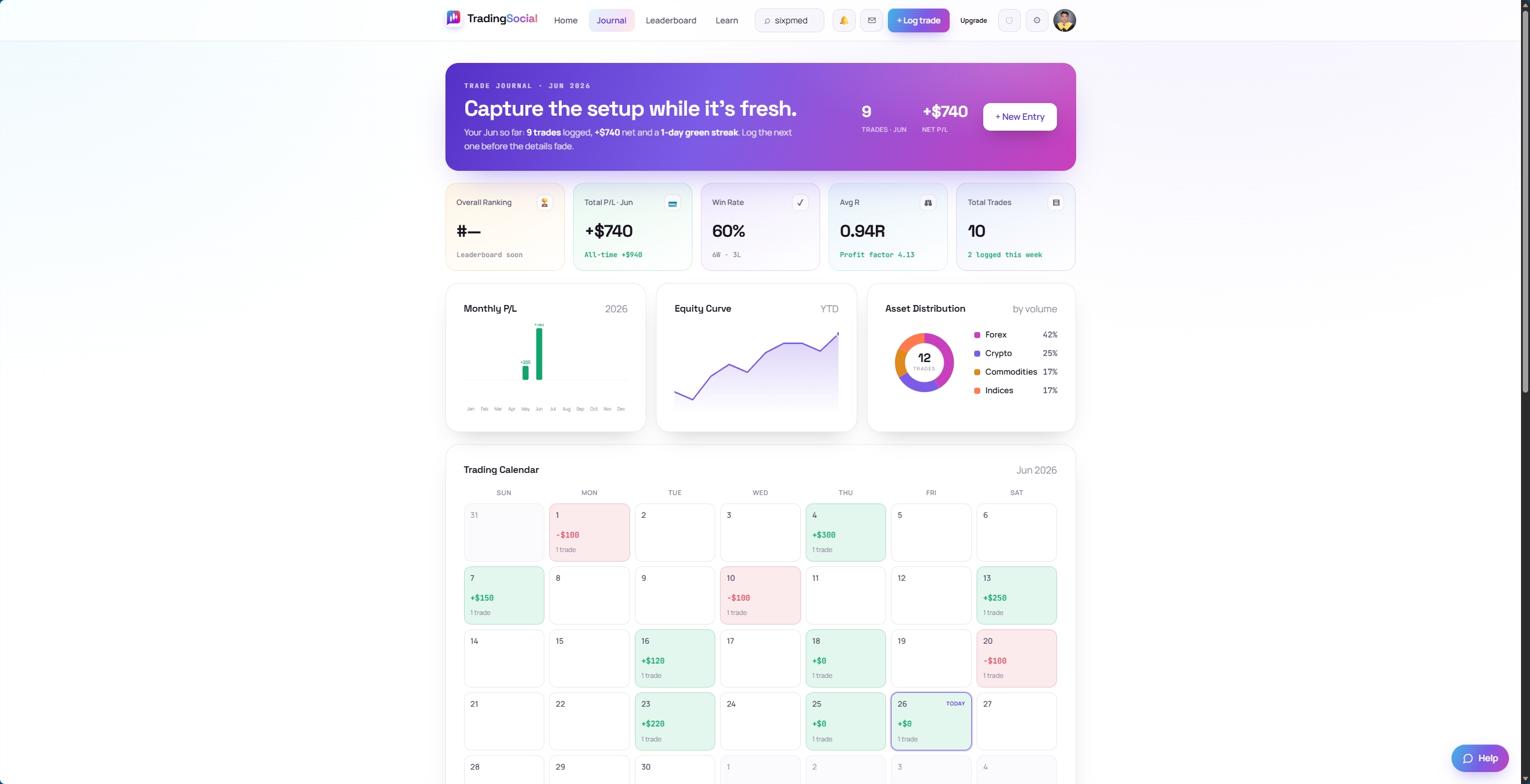
Forty pips on EUR/USD and forty pips on GBP/NZD carry different risk, and a session that carries your account in London can drag it down in Asia. Pip movement, R multiple and session all calculate and tag automatically on every logged trade.
Forty pips remembered after the fact isn't forty pips logged with the R multiple and lot size that show whether it was actually a good trade.
The same EUR/USD setup means something different in London than in the Asia session — without that tag, you can't tell if the pair is the problem or the timing is.
Every pair tagged by session, pips and R calculated automatically, and MT5-synced trades locked once imported.
Pairs, sessions, pips and R — the details that actually decide whether a forex edge is real.
Log majors, minors and crosses with pip movement and R multiple calculated the moment you close the trade.
See your London, New York, Asia and Sydney session numbers side by side, and find out which one actually carries your account.
Record lot size and risk per trade alongside every entry, so position sizing shows up in the numbers, not just the memory.
Note the spread and overnight swap on a trade so the cost of holding a position is part of the record, not a surprise later.
Tag trades taken around high-impact news and see whether trading the calendar helps your numbers or hurts them.
Connect MT5 and closed trades land automatically, hourly, verified and locked. See how the sync works on our MT5 page.
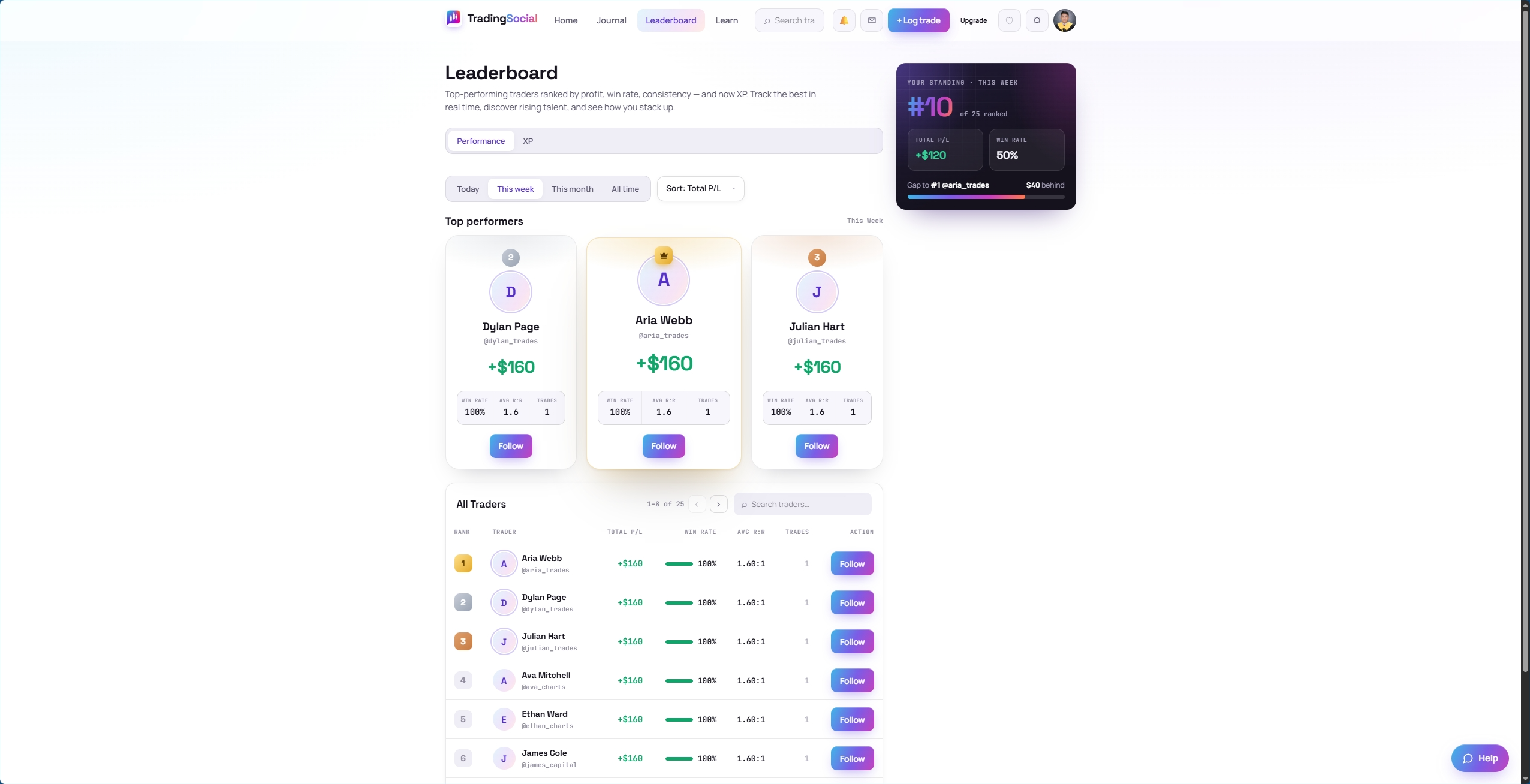
MT5-synced trades feed straight into a ranked table — win rate, R:R and expectancy, not a screenshot you chose to post.
Ranked side by side, calculated the same way for every account.
Filter by verified or self-reported before you decide whose numbers to trust.
Connect MT5 and your closed trades count toward your ranking automatically.
Three steps between a scattered log and a track record you can point to.
Journal trades manually, or connect MT5 and let closed trades sync in automatically.
Break your numbers down by session, London, New York, Asia or Sydney, and by the pairs you actually trade.
Verified, synced trades are locked once imported — a track record you can point to instead of explain.
Screenshots prove you can trade once. A journal with verified sync is what proves you can do it again — pair after pair, session after session.
The case for verified journaling
A forex trading journal is a record of every trade you take — pair, session, size, pips and reasoning — kept in one place so you can review it later. Screenshots and memory fade; a proper journal shows the full picture, wins and losses together.
Yes. Log a trade once and TradingSocial calculates the pip movement and R multiple together, so you can see both the raw price move and the risk-adjusted result without doing the maths yourself.
At minimum: the pair, session, direction, size, entry and exit, and the pips gained or lost with the R multiple relative to your risk. Spread, swap and any nearby news event are worth adding too, since they explain results a pip count alone cannot.
Yes. Every trade is tagged with the session it was taken in, London, New York, Asia (Tokyo) or Sydney, so you can filter your journal and see whether a particular session is carrying your account or costing you money.
Automatic sync currently works with MT5 only, since it is the dominant retail forex platform. You can still journal trades from any other broker manually, with pair, pips, R multiple, lot size and notes all included. Our guide to choosing an MT5 trading journal covers what to ask about sync, and which alternatives cover the brokers we don't.
Journal your majors, minors and crosses, break performance down by session, and connect MT5 for a verified track record.